Thoughtful reflections for a noisy world.
Newsletter
Join the Quiet Frontier Newsletter
Quiet Frontier is growing, and you’re welcome to be part of it from the beginning.
Recent Writing and Videos
Exhaustion and Gratitude: A Moment of Reflection
What began as a place to explore ideas has become something much more meaningful to me. Not because of the numbers, but because of the conversations and connections those ideas have inspired.
When Being Good Gives Us Permission to Be Bad
This video explores the psychological concept of moral licensing, or the “virtue trap.” Moral licensing occurs when we treat good behavior almost like a form of credit, and let past virtues excuse future lapses in judgment.
The Internal Narrative That Keeps You Stuck
Are the internal critic, limiting beliefs and negative self talk keeping you stuck? Your internal narrative can drive self sabotage, but it can also be rewritten.

Original Music for an Autumn Night
I’ve always loved the fall season, and Halloween in particular. Lately, I found myself wanting to spend some time composing rather than writing or talking, so I decided to follow that impulse and see where it led.
When Certainty Becomes a Liability
This video examines the psychological costs of certainty-seeking and how embracing strategic doubt promote intellectual humility lead to deeper understanding.
When Motivation Fails: Build Momentum Instead
Learn how to build lasting momentum and master productivity by relying on mechanical habits for sustainable progress rather than on fleeting motivation. Discover why losing interest might actually be a signal to upgrade your personal systems.

What Do We Really Pay For? Health Care Beyond Politics
This article argues that the term “health care” has lost its meaning by becoming a blanket for administrative efficiency, and it calls for redefining care as sustained relational attention to restore human connection in medical systems.
The Power of Deep Time: Breaking Free from the Endless Scroll
With today’s always-on connectivity, it’s easy to get trapped in an endless loop of instant gratification and short-term thinking. But there’s a way out. Learn practical strategies such as cathedral thinking, seventh generation principle, and strategic patience to turn everyday habits into lasting legacy.
Why We Over-explain Our Boundaries
Explore how overjustification undermines your authority and learn practical strategies to reclaim confident, boundary-setting language that actually serves you. This video dives deep into the psychology of defensive justifications and offers actionable steps toward quieter self-assurance.
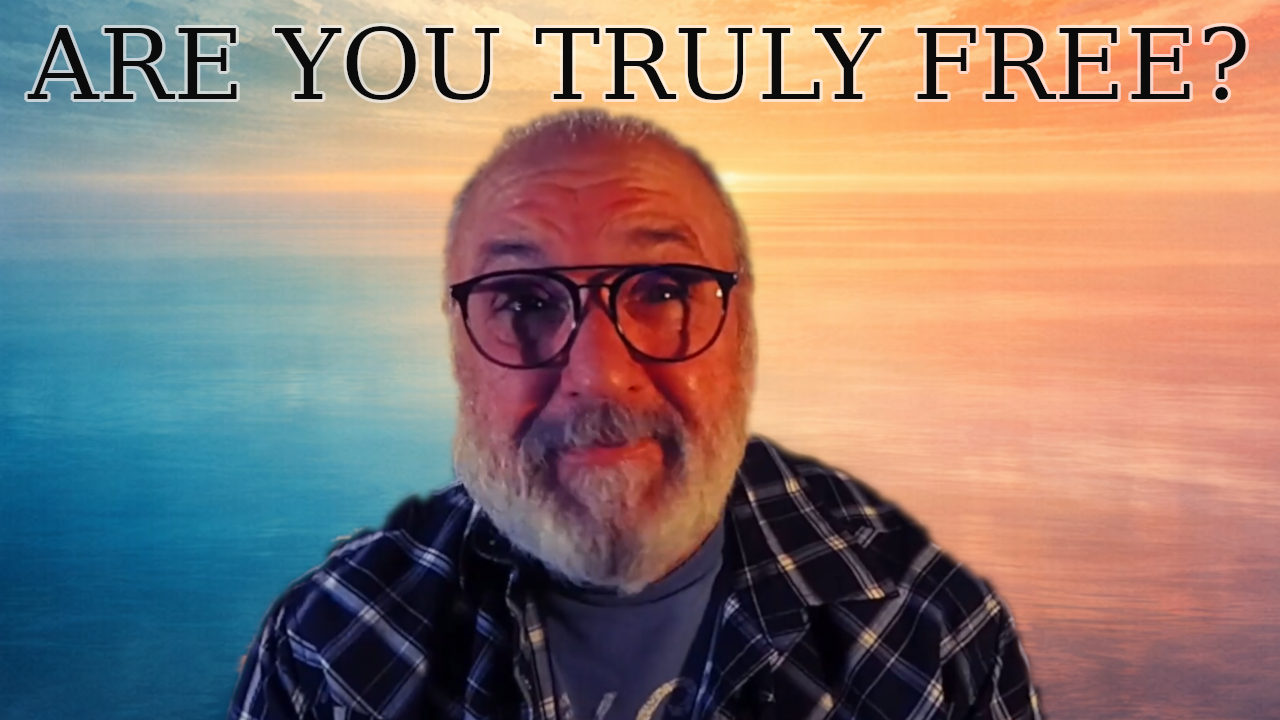
The Paradox of Freedom: Why We Don't Feel Free
What is freedom, really? This video explores the dimensions of formal freedom, practical freedom and internal freedom, and the ways in which agency is interwoven through each of these dimensions.