
Before the Rules
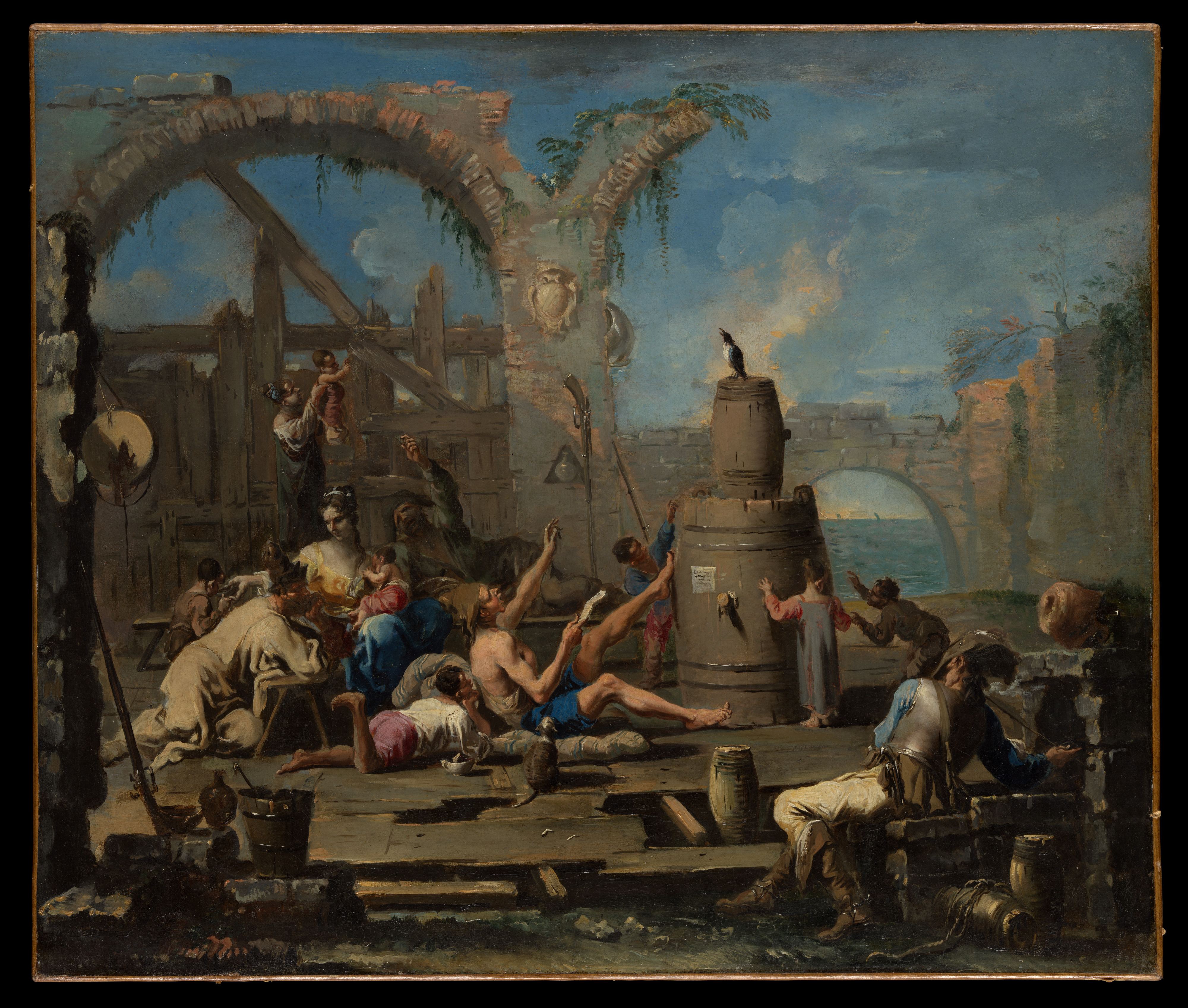
Image: The Tame Magpie, Alessandro Magnasco ca. 1707–8 (public domain, The Met Collection)
The Limitations of Sociology
Sociology gives us useful tools for understanding social norms. However, those tools tend to examine norms only after they are already in place.
The functionalist paradigm explains how norms maintain social order. Conflict theory shows how norms reflect power imbalances. Symbolic interactionists explore how norms are interpreted and negotiated in everyday life. Each perspective tells us something important. Yet all of them begin with norms already in place. They describe how norms operate, not what gives them weight and authority in the first place. What remains unclear is where norms derive their authority before they are analyzed, enforced, or institutionalized.
This gap between the source and the social expression of norms becomes clearer as societies grow larger and more complex. In small communities, norms are enforced informally through shared expectations, reputation, and social pressure. Émile Durkheim called this mechanical solidarity. As scale increases, society moves toward organic solidarity. Enforcement of norms shifts toward positive law: written rules, courts, and formal sanctions. But law itself does not generate legitimacy. In fact, codification can move us further from moral intuition, transforming lived moral understanding into compliance with rules.
Intuitive Understanding
Enlightenment thinkers attempted to give rational form to the intuitive understanding of “what is right” through the idea of natural law. This is the idea that certain rights and moral limits exist prior to political authority. Whether grounded in reason, nature, or a shared human condition, natural law was an effort to explain why some laws feel binding and others feel illegitimate, even when both are enforced. In this sense, natural law does not compete with sociological explanations; it gestures toward the same pre-social foundations those explanations presuppose.
When laws violate widely held assumptions about dignity, fairness, or human worth, people recognize the violation immediately. This happens even if they cannot fully explain why. This suggests that legal authority rests on something much deeper than law itself. It rests on prior moral commitments that sociology can observe, but cannot fully account for.
Legal prohibitions against unprovoked violence are a good example. A functionalist might explain how these codified norms reduce chaos and allow cooperation. A conflict theorist might argue that they protect existing power structures. An interactionist might examine how they help us to distinguish violence from play, accident, or ritualized aggression.
What none of these perspectives explain is why unprovoked violence feels wrong to begin with.
The intuitive response to violent acts is not primarily intellectual. It is immediate and visceral. People recoil from unprovoked, intentional harm long before they can articulate moral rules or legal principles. Most people feel distress when they witness suffering, especially when it is caused by intentional violence. That discomfort arises before any appeal to social contracts or institutional authority. These reactions point to something prior to socialization, a basic moral orientation that precedes formal norm-building.
Discovery and Interpretation
This does not mean morality is rigidly or universally defined, particularly in its details. In fact, the very act of defining morality adds a layer of abstraction between the intuitive “knowing” of what is moral and its social manifestation. Cultures clearly differ in how norms are expressed, justified, and enforced. What appears to be shared is something more fundamental: an intuitive sensitivity to harm, fairness, and reciprocity. At this level, norms are not invented by society. Instead, they are discovered through participation in social life.
This discovery is rarely conscious. It operates through felt responses; approval, discomfort, shame, outrage. It happens long before reflection or debate enters the picture. When behavior threatens trust or cooperation, it triggers a sense that something is off. That felt disruption becomes the raw material from which social norms are later articulated, negotiated, and institutionalized.
Sociology is an excellent tool for understanding how norms evolve, how they are enforced, and how they can be distorted by power. But it cannot fully explain why norms carry moral weight before they are written down or imposed. This is the realm of philosophy and theology, which grapple with questions of legitimacy and moral grounding.
Recognizing a pre-sociological basis for social norms doesn’t weaken sociological analysis. It completes it. It reminds us that social order does not begin with rules, but with human beings already oriented toward an intuitive sense of what is right versus what is wrong. Norms endure not merely because they are enforced, but because they resonate with something we already sense to be true. In that sense, social life begins not with agreement, but with recognition.
About the Author
Rod Price has spent his career in human services, supporting mental health and addiction recovery, and teaching courses on human behavior. A lifelong seeker of meaning through music, reflection, and quiet insight, he created Quiet Frontier as a space for thoughtful conversation in a noisy world.