
The Quiet Self
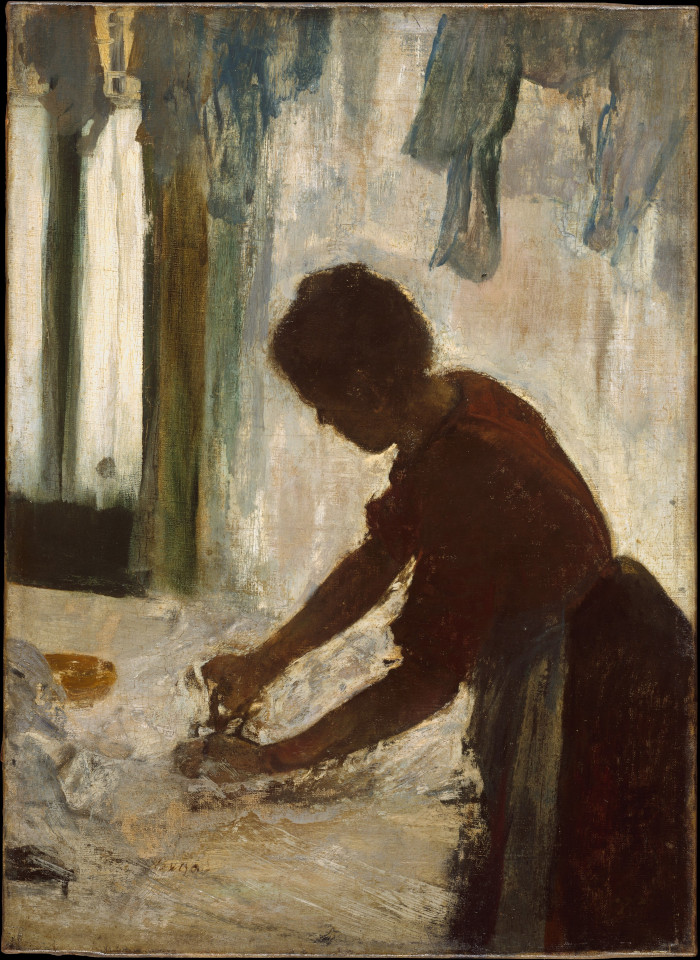
Image: A Woman Ironing, Edgar Degas, The Met Museum (public domain)
The Quiet Self
Authenticity, Recognition, and the Value of Invisible Labor
Author’s Note:
I am not a literary critic, nor is this meant to be an analysis of J.D. Salinger’s work. Instead, I use Salinger’s choices as a starting point for reflecting on authenticity, invisible effort, and the quiet ways people assign meaning to their work.
When Effort Goes Unseen
We all have moments when our internal sense of worth feels at odds with external perception. Perhaps you’ve painstakingly crafted something, a piece of writing, a solution to a complex problem, a carefully prepared meal, only to have it met with indifference or misunderstanding. It’s a disorienting experience, one that can leave you questioning the value of your efforts. In those moments, the pressure isn’t just disappointment; it’s the impulse to justify ourselves, to make the value visible so it can’t be dismissed. But what if the value wasn’t in the applause, but in the act of creation itself? And what if choosing authenticity over external validation isn’t a sign of weakness, but a quiet assertion of self-worth?
Holden Caulfield and Existential Refusal
These questions resonate deeply when considering the life and work of J.D. Salinger, author of The Catcher in the Rye. The novel’s protagonist, Holden Caulfield, is famously repulsed by what he calls “phoniness” – the superficiality and inauthenticity he perceives in the adult world. Holden dreams of being a “catcher in the rye,” standing at the edge of a cliff to prevent children from falling into a loss of innocence and, by extension, into that same phoniness. He resists the pressures of conformity and strives for a genuine existence, even if it means becoming an outsider. His resistance isn’t political or ideological so much as existential—a refusal to participate in a world that feels performative rather than sincere.
Salinger’s Choice of Obscurity
Salinger’s own life took an even more radical turn. After achieving immense literary success with Catcher, he began a decades-long withdrawal from public life. He ceased giving interviews, stopped publishing new work after 1965, and retreated to a secluded home in New Hampshire. While the reasons for this decision remain speculative, many critics argue it was a deliberate embodiment of the values Holden Caulfield espoused. In choosing obscurity, Salinger also accepted the risk of being misunderstood, of having his silence interpreted as arrogance, fragility, or retreat. He seemed to view the demands of fame, the pressures of literary expectation, and even the act of performing for an audience as threats to authenticity. Publishing, as a form of seeking external validation, may have felt incompatible with the integrity of the work itself.
Invisible Labor and the Integrity of Work
Reports suggest that Salinger continued to write prolifically in private, filling notebooks with hundreds of unpublished pages. This suggests that his motivation wasn’t recognition or acclaim, but engagement in the act of writing itself. This kind of work; deliberate, effortful, and unseen, rarely fits modern definitions of productivity, yet it may be where integrity is most fully preserved. Writing became not a performance, but a private pursuit of meaning. The intrinsic reward of creation mattered more than the external reward of approval.
Choosing Coherence Over Applause
This raises important questions for us today. We live in a culture saturated with social media, where self-presentation and the pursuit of “likes” often overshadow genuine connection. The architecture of modern platforms rewards visibility, consistency, and performance. Depth and intention are rarely part of the equation. But what about the value of work that remains unseen; the quiet contributions that don’t generate immediate applause? What about the integrity of pursuing a passion simply for the joy of it, without needing to broadcast it to the world? Choosing humility over applause doesn’t signal insignificance. It reflects a grounding internal rhythm, invisible to most observers. It is a recognition that self-worth isn’t contingent on external validation, but rooted in the integrity of one’s actions and the authenticity of one’s experience. Like Salinger, we can choose the quiet satisfaction of creation over the fleeting allure of recognition, and find meaning not in applause, but in the work itself. The self shaped by this choice isn’t loud or optimized. But it is coherent.
Related on Quiet Frontier:
About the Author
Rod Price has spent his career in human services, supporting mental health and addiction recovery, and teaching courses on human behavior. A lifelong seeker of meaning through music, reflection, and quiet insight, he created Quiet Frontier as a space for thoughtful conversation in a noisy world. Read more about the journey